- info@velloraimpact.com
- 26/Office, Newyork Trade Centre, Opp. Muktidham Derasar, SG Highway, Thaltej, Ahmedabad
Grains and Pulses: Building a Reliable Agricultural Supply Network
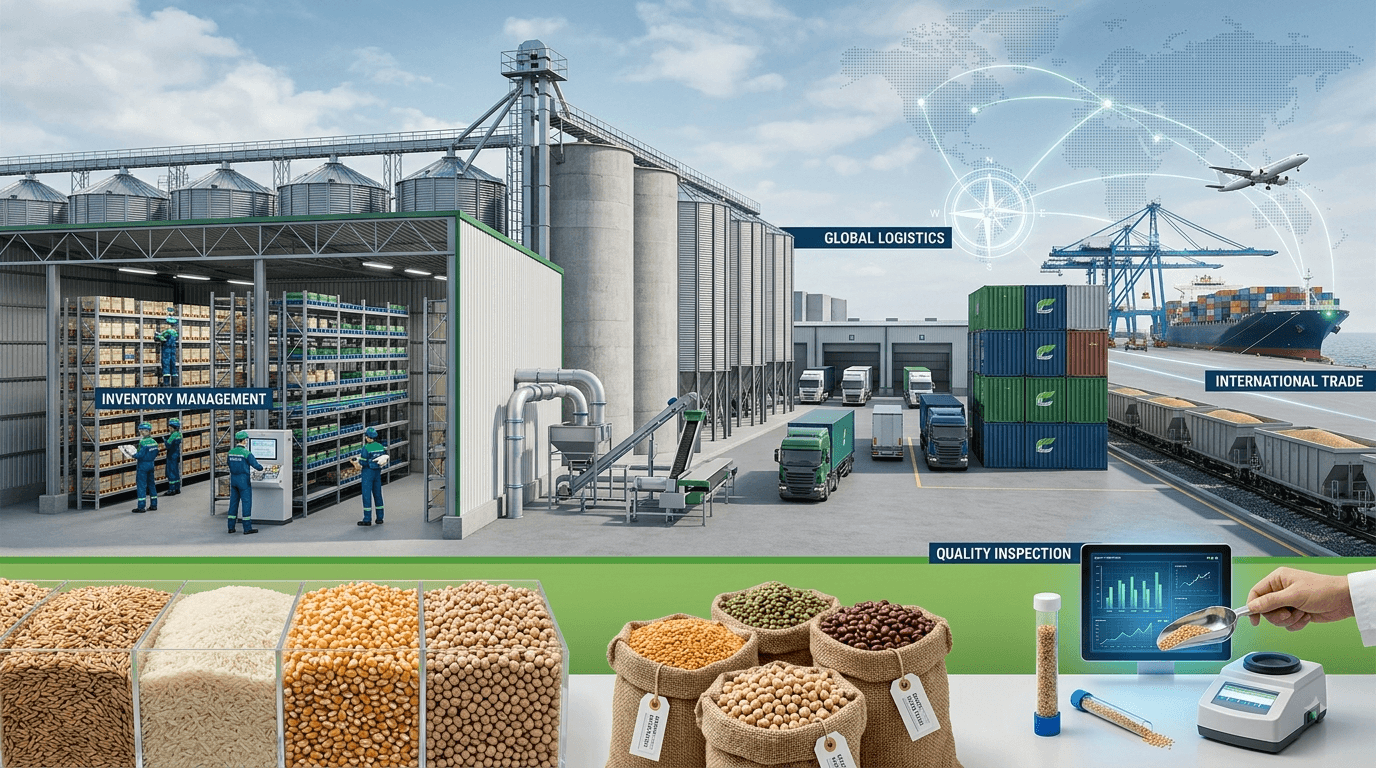
Grains and pulses are among the most important agricultural commodities traded across domestic and international markets. They support food security, nutrition, food processing industries, and large-scale distribution networks. As demand for these products continues to grow, businesses are increasingly focusing on creating a reliable agricultural supply network that ensures consistent quality, timely delivery, and long-term stability.
A strong supply network is not built overnight. It requires trusted supplier relationships, quality management, efficient storage, and coordinated logistics. Organizations that invest in these areas are better prepared to meet market expectations and reduce operational risks.
At Vellora Impact, we believe that reliability is the foundation of sustainable agricultural partnerships.
Why Grains and Pulses Are Strategically Important
- High consumption across populations
- Long shelf life compared to fresh produce
- Use in food processing industries
- Nutritional value, especially protein and fiber
- Strong domestic and export demand
What Is a Reliable Agricultural Supply Network?
- Consistent product quality
- Dependable supply availability
- Transparent communication
- Efficient logistics
- Long-term business relationships
The Role of Supplier Relationships
Storage and Inventory Management
Proper storage is critical for preserving the quality of grains and pulses.
Effective storage management involves:
Clean storage facilities
Moisture control
Ventilation
Pest prevention
Inventory rotation
Poor storage can lead to quality deterioration, contamination, and financial losses. Businesses that invest in proper storage infrastructure can protect product value throughout the supply chain.
The Importance of Traceability
Modern agricultural markets increasingly value traceability and transparency.
Traceability helps businesses:
Identify product origin
Monitor quality history
Improve accountability
Respond quickly to issues
Build buyer trust
Clear records and documentation strengthen confidence in the supply process and support long-term commercial relationships.
Logistics and Timely Delivery
Reliable sourcing must be supported by reliable logistics.
Important logistics considerations include:
Transportation planning
Route optimization
Loading and unloading efficiency
Delivery scheduling
Coordination between stakeholders
Timely delivery is especially important for businesses that operate on production schedules or supply commitments.
Managing Supply Risks
Agricultural supply chains can be affected by:
Weather conditions
Transportation disruptions
Market fluctuations
Storage issues
Communication gaps
A resilient supply network reduces these risks through better planning, diversified supplier relationships, and improved coordination.
Technology in Supply Network Management
Technology is helping agricultural businesses improve visibility and operational efficiency.
Useful applications include:
Digital inventory tracking
Supplier communication systems
Quality records
Shipment monitoring
Demand forecasting
Technology supports better decision-making and helps businesses respond more quickly to changing market conditions.
Building Long-Term Buyer Confidence
Buyers prefer partners who can deliver not only products but also consistency and professionalism.
Long-term buyer confidence is strengthened by:
Reliable communication
Consistent quality
Transparent processes
Timely delivery
Problem-solving capability
Trust becomes a competitive advantage in agricultural markets.
Sustainability and Responsible Sourcing
Responsible sourcing is becoming increasingly important for global food supply chains.
Sustainable practices may include:
Reducing post-harvest losses
Efficient storage and transportation
Responsible resource use
Support for long-term agricultural productivity
Sustainability contributes to stronger and more resilient supply networks.
At Vellora Impact, our agriculture division focuses on building dependable sourcing and supply relationships for grains, pulses, and other agricultural products.
Our approach emphasizes:
- Quality-focused sourcing
- Reliable supplier networks
- Proper handling and storage
- Transparent communication
- Long-term business relationships
Conclusion
A reliable agricultural supply network is more than a logistics system—it is a strategic business asset. For grains and pulses, success depends on consistent quality, strong supplier relationships, efficient storage, transparent communication, and dependable delivery.
As global demand for agricultural commodities continues to grow, businesses that invest in reliability and long-term partnerships will be better positioned for sustainable growth.
At Vellora Impact, we remain committed to supporting quality-driven agricultural sourcing and supply partnerships that create value for both suppliers and buyers.
FAQs
It is a coordinated system that ensures consistent quality, dependable supply, efficient logistics, and transparent communication between suppliers and buyers.
They are widely consumed, have relatively long shelf lives, and are essential for food processing and nutrition.
Through supplier selection, inspection, proper storage, handling, and quality monitoring.
Proper storage protects products from moisture, pests, contamination, and quality deterioration.
Technology improves inventory tracking, communication, shipment monitoring, and planning.

At Vellora Impact LTD, we believe that meaningful progress is driven by innovation, reliability, and a commitment to excellence.
Agriculture and Information Technology
Business Hours
Monday - Friday
09:00 AM - 08:00 PM
Saturday - sunday
Closed on weekend
Call Us Any Time
+91-87588 04293
Call Us Any Time
+91-78599 30502

What's App
73594 68442
Design & Develop by : Dcodes Technologies